

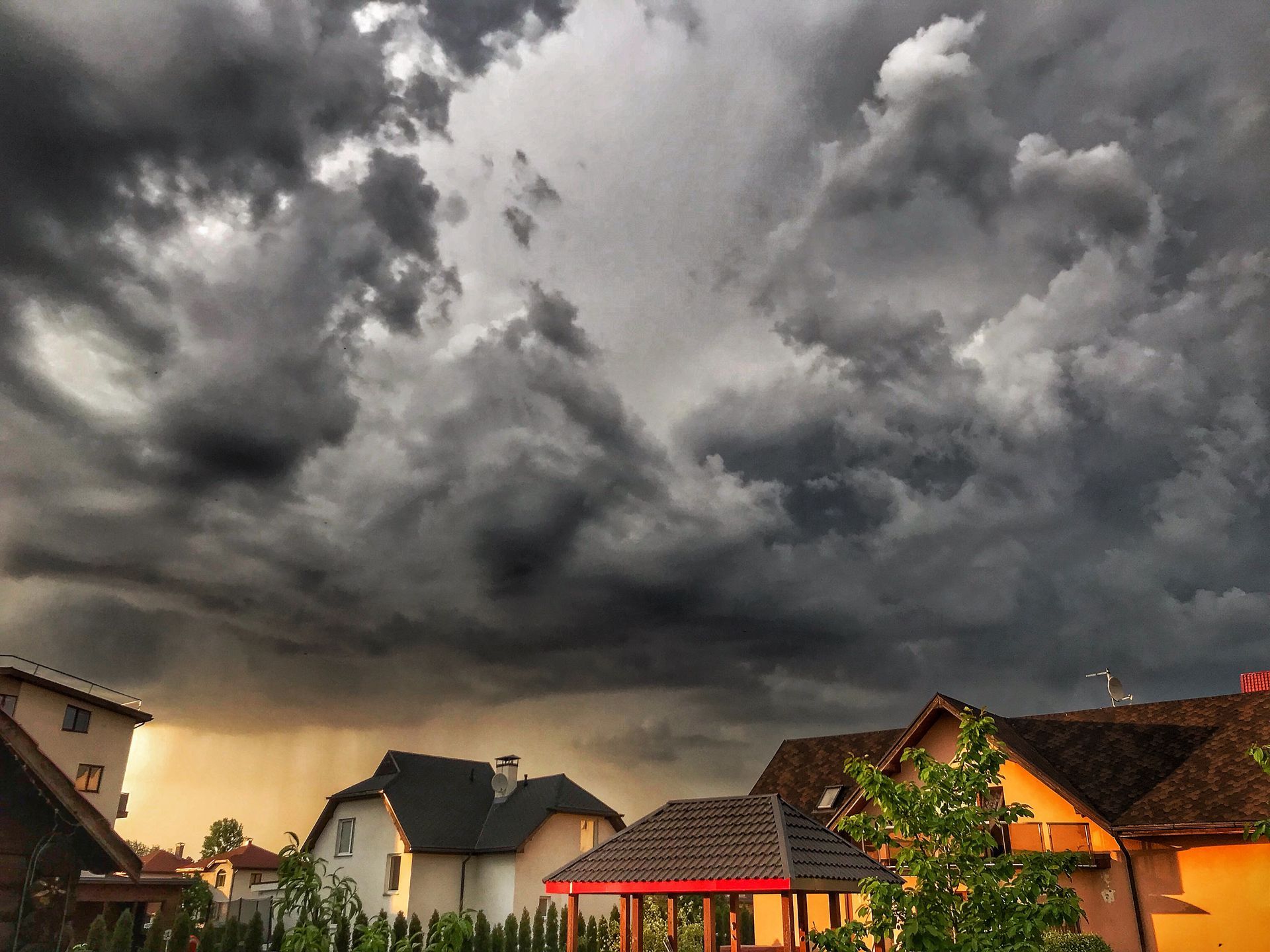
A severe thunderstorm warning gives you minutes, not days. Knowing how to prepare for a summer storm before one is bearing down on your home is the difference between a tense afternoon and a water-damaged basement, and most of the work can be done in under an hour.
Why late summer storms leave so little time to prepare
Most weather warnings in Canada arrive six to 24 hours ahead of the event. Thunderstorms are the exception: Environment and Climate Change Canada notes that severe thunderstorms can develop rapidly, sometimes with less than half an hour's notice. By late summer, the ingredients are all in place. Weeks of heat have loaded the atmosphere with energy, humidity is high, and in many regions the ground is already saturated from earlier rain, so new water has nowhere to go but sideways, toward foundations and into basements.
The threshold matters too. Environment and Climate Change Canada issues a Severe Thunderstorm Warning when wind gusts of 90 km/h or greater are expected. At that speed, an unsecured patio chair, umbrella, or trampoline stops being furniture and becomes a projectile capable of breaking a window or puncturing siding.
The first 30 minutes: secure what the wind can lift
When a warning is issued, start outside and work inward. Move patio furniture, umbrellas, planters, toys, and the barbecue into the garage or shed; anything too heavy to move, tie down or flip so it presents less surface to the wind. Close and latch every window, including basement and garage windows, and make sure the garage door is fully closed: a garage door blown inward is one of the most common ways wind enters and pressurizes a house. Park vehicles away from large trees, plug in phones and power banks, and unplug sensitive electronics such as televisions and computers before the lightning arrives, not after the first flicker.
Grab your emergency kit, do not build it
Public Safety Canada advises every household to be prepared to be self-sufficient for at least 72 hours. The middle of a storm warning is not the moment to build that kit from scratch; it is the moment to finalize it. In the last minutes before a storm, confirm the kit contains water (two litres per person per day), any prescription medications, a flashlight with fresh batteries, a battery-powered or crank radio, phone chargers, cash in small bills, and food and supplies for pets. Add two items most kits are missing: a copy of your insurance policy number and a few recent photos of each room of your home on your phone. If damage happens, that documentation speeds up your claim considerably. Keep the kit beside the exit you would actually use.
Sandbags: how to place them so they actually work
Sandbags fail more often from poor placement than from poor bags. Fill each bag only halfway to two thirds; an overfilled bag will not mould to the bags around it and leaves gaps water finds immediately. Do not tie the bags. Fold the open flap underneath, facing the direction the water will come from, and lay the bags flat. Stagger the joints like bricklaying, so no seam lines up with the seam below it. For most homes, sandbags belong in a few specific places: across door thresholds, along the base of a garage door, and around low window wells. Two or three courses laid tightly, ideally with a sheet of polyethylene beneath and behind them, will redirect far more water than a taller, sloppier wall.
The five-minute drainage check
Water damage during a storm is usually a plumbing-of-the-yard problem, not a rainfall problem. Before the storm arrives, walk the property once. Clear leaves and debris from the storm grate at the curb, because a blocked municipal grate can back water up your driveway. Confirm every downspout is connected and its extension carries water at least two metres from the foundation; a single disconnected downspout can dump hundreds of litres directly against the basement wall during one downpour. Scoop debris out of window wells. Finally, test the sump pump by lifting the float or pouring in a pail of water, and confirm it discharges outside, away from the house. A pump that has sat idle all summer is the one most likely to fail at 2 a.m.
If the storm wins anyway, you are not on your own
Even a well-prepared home can take damage from 90 km/h gusts, wind-driven rain, or a flooded street. If water gets in or wind opens up the roof, Paul Davis is ready with our Emergency Response Promise: we will contact you within 30 minutes of your call, we are onsite within hours, we document your process thoroughly, and we serve you with empathy and concern for your situation. Call 1-800-661-5975 any time, day or night, or find your local Paul Davis. With 65+ locations across Canada, help is closer than the next storm.
Frequently asked questions
What should I do first when a severe thunderstorm warning is issued?
Secure the outdoors first: move or tie down patio furniture, close all windows and the garage door, and park vehicles away from trees. Then bring your emergency kit to the door, charge your phone, and unplug sensitive electronics. Plan to shelter in an interior room on the lowest level, away from windows.
How many sandbags do I need to protect a doorway?
A single door threshold typically needs 10 to 15 bags, laid two to three courses high with staggered joints. Fill bags only halfway to two thirds, leave them untied with the flap folded underneath, and place a polyethylene sheet beneath and behind the wall for a tighter seal.
What belongs in a grab-and-go emergency kit?
Public Safety Canada recommends supplies for at least 72 hours: two litres of water per person per day, medications, a flashlight, a battery-powered radio, phone chargers, cash, and pet supplies. Add your insurance policy number and recent photos of your home to make any claim faster.

Our Emergency Response Promise
Paul Davis franchisees across Canada are ready to respond to your property damage, 24/7.
We'll contact you within 30 minutes of your call
We’re onsite within hours
We document your process thoroughly
We serve you with empathy and concern for your situation
