

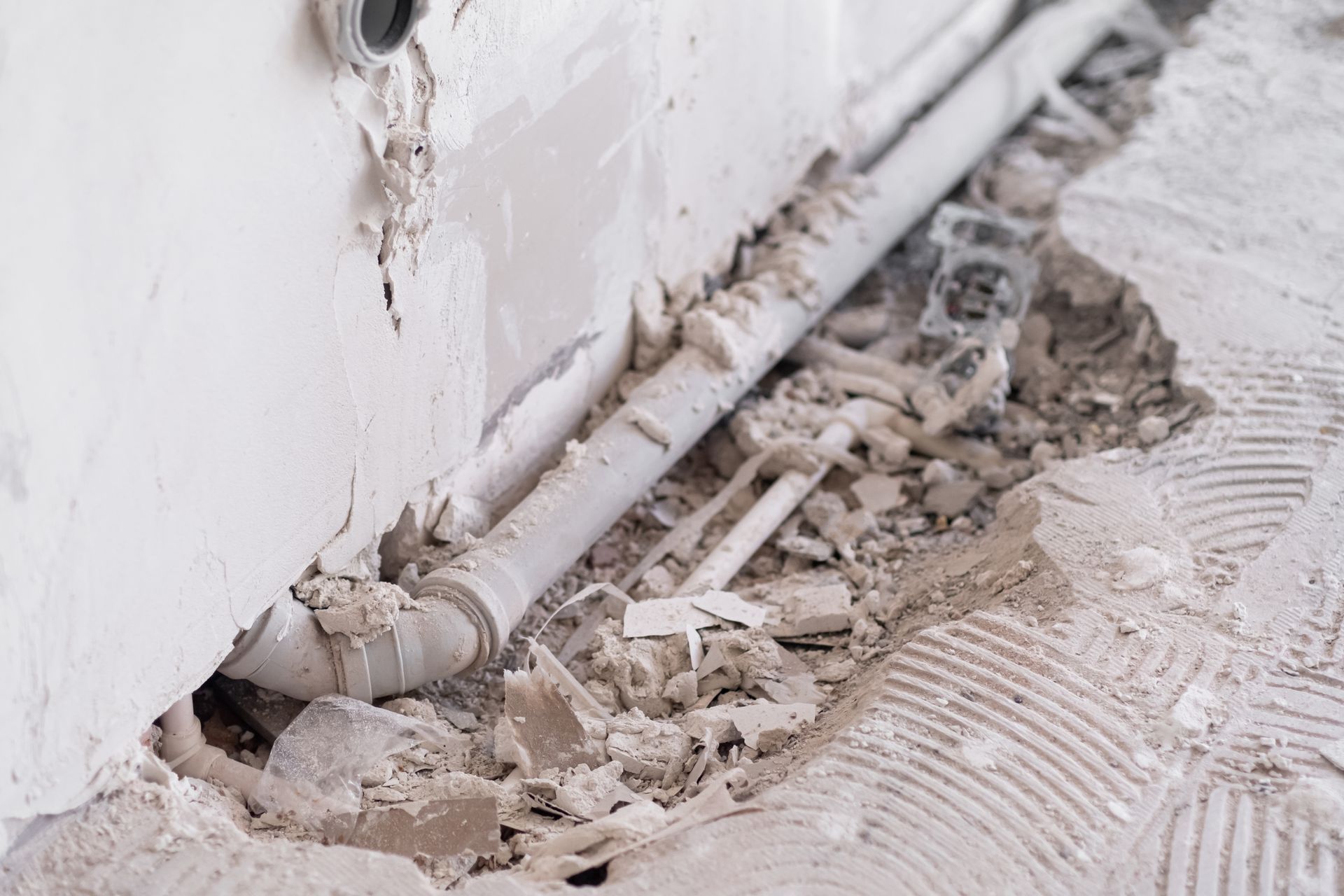
The burst pipe restoration process starts within minutes of the water hitting the floor, and what happens in those first minutes decides whether the damage stays contained or spreads into the subfloor, insulation and framing. Understanding this process helps homeowners know exactly what to expect from the moment they call for help to the day their home is back to normal.
The First Call: What Happens Within Minutes
The first step in the burst pipe restoration process happens over the phone. A trained technician asks a short set of questions: where the water is coming from, whether the main shutoff valve has been closed, and what areas of the home are affected. If the water source has not been stopped, this is the first instruction, since every additional minute the water runs adds volume that has to be extracted and dried later.
From there, a technician is dispatched. Paul Davis franchises across Canada operate on a 24/7 emergency response model, because burst pipes do not wait for business hours. A frozen supply line in an unheated basement or a failed connector behind a washing machine can let go at 2 a.m. just as easily as at noon, and the response has to match that.
Stopping the Water: Emergency Water Damage Mitigation
Mitigation is the technical term for the work that stops a bad situation from becoming worse, and it is the priority in the first hours on site. This stage typically includes:
- Locating and confirming the water source is fully shut off
- Extracting standing water with truck-mounted or portable extraction equipment, which removes far more water per hour than a wet vacuum
- Removing materials that cannot be saved, such as saturated carpet underpad or swollen baseboard
- Setting up air movers and dehumidifiers to begin controlled drying
The goal of emergency water damage mitigation is to get moisture levels moving in the right direction before secondary damage sets in, meaning warping, delamination of engineered flooring, and the early stages of mould growth.
Moisture Detection: Finding Damage You Cannot See
A burst pipe rarely stays contained to the room where it happened. Water travels along the path of least resistance, so it wicks sideways under baseboards, seeps between subfloor layers, and climbs up drywall through capillary action long before a stain becomes visible on the surface.
Moisture detection after water damage matters as much as the visible cleanup, because a wall can look completely dry and still register wet several inches into the drywall core. Technicians use penetrating and non-penetrating moisture meters to check the actual water content inside building materials, along with infrared thermal cameras that reveal temperature differences indicating hidden dampness behind walls or under flooring.
Fast, accurate moisture detection matters because of how quickly the next problem can start. Health Canada states that mould will begin to grow in an area with excessive moisture within 48 hours. That is not a worst case estimate; it is the baseline. A missed pocket of moisture behind a baseboard or inside a wall cavity can become a mould problem before a homeowner would ever notice a smell or a stain, which is why documented moisture readings, not just a visual check, drive the drying plan.
Once wet areas are mapped, technicians set daily drying targets and return to re-check readings, typically once every 24 hours, adjusting the placement of air movers and dehumidifiers until every material in the affected area reads back to a normal moisture content, not just the surface.
Burst Pipe Cleanup and Repair: Removing What Cannot Be Saved
Cleanup runs alongside drying rather than waiting for it to finish. Materials that absorbed water and cannot be fully dried, such as wet insulation, water-damaged drywall below the flood line, or delaminated subfloor, are removed and disposed of. This step is not just about appearance. Materials left in place after prolonged saturation hold moisture even after the surrounding air feels dry, and they can become a hidden source of odour or mould weeks later.
Technicians also disinfect affected surfaces once materials are removed, particularly in cases where the water source was a supply line feeding an appliance, since standing water can carry bacteria even when it started out as clean tap water.
Rebuild: Restoring Your Home to Pre-Loss Condition
Reconstruction is the final stage: replacing drywall, insulation, flooring, baseboard and trim to match what was there before the loss, sometimes called pre-loss condition. Managing the rebuild in-house is where a restoration company differs from a cleanup crew. The same team that documented the damage and managed the drying can also manage the rebuild, which means fewer handoffs, fewer gaps in documentation for an insurance claim, and one point of contact from the first call to the final walkthrough.
Frequently Asked Questions
How long does the burst pipe restoration process take?
It depends on how much water was involved and how far it travelled before the source was shut off. Extraction and initial mitigation usually happen within hours of the call, while drying can take three to five days, and full rebuild timelines vary with the scope of repairs needed.
Can I stay in my home during the drying process?
In most cases, yes, especially if the damage is limited to one area. Air movers and dehumidifiers run continuously during drying, so expect some noise, and access to the affected room may be limited until materials are removed and readings stabilize.
Do I need to move out during a pipe burst emergency response in Canada?
Only if the damage affects a large portion of the home, utilities are compromised, or air quality in the space becomes a concern during demolition. A technician can tell you early on whether temporary relocation makes sense for your situation.
Will drywall always need to be removed?
Not always. If moisture readings show the material dried fully within a normal timeframe and there is no visible swelling or mould, it may be saved. Materials that stayed wet too long or that sit below the water line typically need to come out.
Does insurance typically cover this process?
Most home insurance policies cover sudden and accidental water damage from a burst pipe, though coverage details vary by policy. Documentation from the mitigation and moisture detection stages is often what an adjuster relies on to assess a claim, which is one reason thorough record-keeping matters throughout the process.
When a pipe bursts, Paul Davis is ready with our Emergency Response Promise: we will contact you within 30 minutes of your call, we are onsite within hours, we document your process thoroughly, and we serve you with empathy and concern for your situation. Call 1-800-661-5975 or find your local Paul Davis, with 65+ locations across Canada.
Our Emergency Response Promise
Paul Davis franchisees across Canada are ready to respond to your property damage, 24/7.
We'll contact you within 30 minutes of your call
We’re onsite within hours
We document your process thoroughly
We serve you with empathy and concern for your situation
