

After a fire, flood, or storm, the damage you can see is rarely the whole story. The restoration equipment used by professionals is what finds the rest: water behind drywall, heat scorched framing without visible char, and smoke particles still floating in the air long after the flames are out. Here is what each core tool actually does, and why it changes the outcome of your recovery.
Moisture meters: finding water you cannot see
A moisture meter is the single most important tool in a water damage response, because visible dampness is only ever a fraction of the actual spread. Water wicks upward through drywall and sideways along floor joists, often travelling several feet beyond the stain you can see on a ceiling or wall.
There are two main types. A pin-type, or penetrating, meter uses two small probes to measure electrical resistance inside a material; more resistance means less moisture. A pinless, or non-penetrating, meter uses electromagnetic sensing to scan through a surface like drywall or hardwood without leaving a mark, which matters when a homeowner does not want dozens of pinholes across a finished wall.
Readings are given as a moisture content percentage specific to the material. Drywall, for example, is generally considered dry once it consistently reads in the range the manufacturer specifies for that product, not simply "when it feels dry to the touch." Technicians take multiple readings across a wall, moving outward from the visible damage until three consecutive readings come back normal, which is how the true boundary of the affected area gets mapped rather than guessed.
It is worth noting what moisture meters are not used for. Health Canada's residential indoor air quality guideline on moulds states that in the absence of established exposure limits, results from air testing for fungi cannot be used to assess health risk to occupants. That is precisely why professional response relies on moisture readings and visible inspection to find and stop the source, rather than air sampling to chase a number that does not exist.
Thermal imaging cameras: seeing temperature, not colour
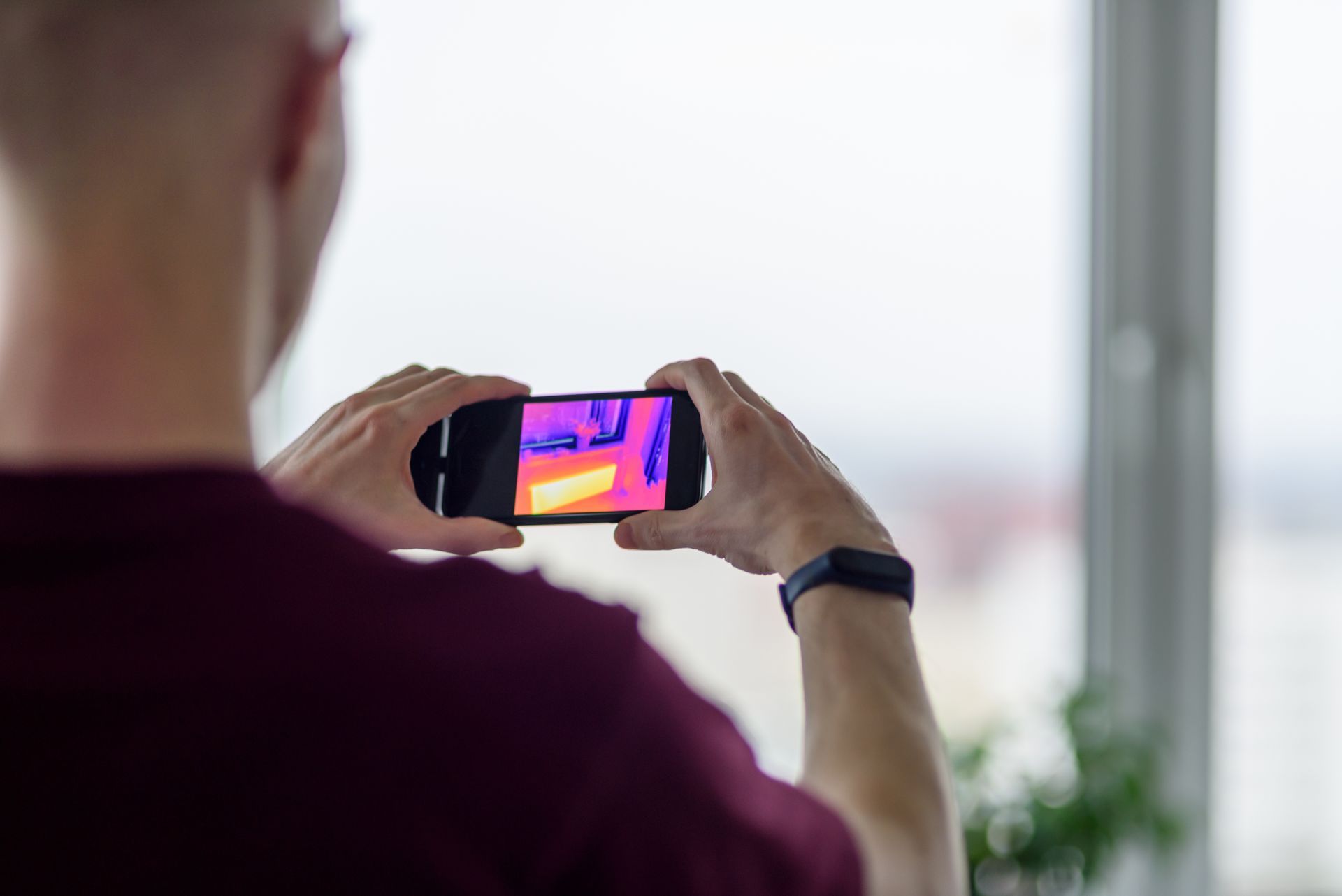
A thermal imaging camera does not "see through walls." It reads surface temperature differences and displays them as a colour map, and in restoration work those temperature differences are often the first clue to a problem hiding behind a finished surface.
Wet drywall or insulation typically reads cooler than the surrounding dry material, because evaporating water pulls heat from its surroundings. That cool patch on the thermal display tells a technician exactly where to confirm with a moisture meter, cutting down the amount of drywall that needs to be opened to trace a leak.
The same camera works in reverse after a fire. It can reveal retained heat deep inside wall cavities, above ceilings, or within framing that looks fully extinguished from the outside, which matters because Statistics Canada reports that structural fires, of which seven in ten were residential, accounted for 42 percent of all reported fire incidents in 2021. A structure fire that appears out is not always fully cool, and a thermal scan is part of confirming it safely before cleanup work begins.
Hygrometers and psychrometric readings: setting the drying target
A hygrometer measures relative humidity, and a psychrometer or built-in sensor on modern drying equipment can calculate the dew point of the air in a room. Together these readings tell a technician what the air itself can absorb, which determines how many air movers and dehumidifiers a space actually needs. Two identical-looking flooded basements can require very different drying setups depending on outdoor humidity, room size, and how much water the materials absorbed, and these readings are how that calculation gets made instead of estimated.
Air scrubbers: cleaning the air itself
An air scrubber pulls air through a series of filters, typically ending in a HEPA filter capable of capturing particles as small as 0.3 microns, before releasing clean air back into the room. During a restoration job this removes mould spores, soot particles, and fine dust that would otherwise resettle on every surface a technician just cleaned.
Air scrubbers are sized and placed based on the room's volume, so the unit can move enough air to achieve several full air changes per hour rather than simply running in a corner. On a fire cleanup, an air scrubber running alongside odour-control equipment is often the difference between a home that still smells like smoke weeks later and one that does not.
Gas detectors and borescopes: the tools that keep everyone safe
After a fire, technicians commonly use a multi-gas detector to check for carbon monoxide and other combustion byproducts before extended work begins in a space, particularly one with poor ventilation. A borescope, a thin camera on a flexible cable, lets a technician look inside a wall cavity, under flooring, or behind a cabinet without demolishing it first, confirming exactly what a moisture meter or thermal camera has already flagged.
What the restoration equipment used by professionals means for you.
None of this equipment replaces judgment. A thermal camera flags a cool spot, a moisture meter confirms it, and a trained technician decides what it means and what to do next. What the equipment does is remove the guesswork, so the drying plan, the demolition boundary, and the air quality plan for your home are based on measurements rather than assumptions. That is also what protects you later: documented moisture readings and thermal images become part of the record an insurance adjuster reviews, which supports a faster, more accurate claim.
If your home or business has been affected by fire, water, wind, or storm damage, Paul Davis is ready with our Emergency Response Promise: we will contact you within 30 minutes of your call, we are onsite within hours, we document your process thoroughly, and we serve you with empathy and concern for your situation. Call 1-800-661-5975 or find your local Paul Davis, with 65+ locations across Canada.
Frequently asked questions
How do restoration companies know if my walls are actually dry? Technicians take moisture meter readings across the affected material and keep moving outward until several consecutive readings return to a normal range for that material. A wall is not considered dry because it looks or feels dry; it is dry when the readings confirm it.
Can a thermal imaging camera see mould?
No. A thermal camera detects temperature differences, not mould itself. It flags a cooler patch that often indicates trapped moisture, which is then confirmed with a moisture meter and a physical inspection.
Do air scrubbers actually remove mould spores from the air?
A HEPA-equipped air scrubber is designed to capture particles down to 0.3 microns, which includes mould spores and soot, as air is pulled through the filter and clean air is released back into the room.
Why does a technician use a borescope instead of just opening the wall?
A borescope lets a technician confirm what is happening inside a wall cavity or under flooring without unnecessary demolition, so only the areas that genuinely need repair are opened up.
Is it true that testing my home's air for mould is not recommended?
Health Canada's guidance states that because there are no established exposure limits for mould in air, air test results cannot reliably be used to assess health risk. The more useful approach is identifying and fixing the moisture source and cleaning any visible or concealed mould.
Our Emergency Response Promise
Paul Davis franchisees across Canada are ready to respond to your property damage, 24/7.
We'll contact you within 30 minutes of your call
We’re onsite within hours
We document your process thoroughly
We serve you with empathy and concern for your situation
