

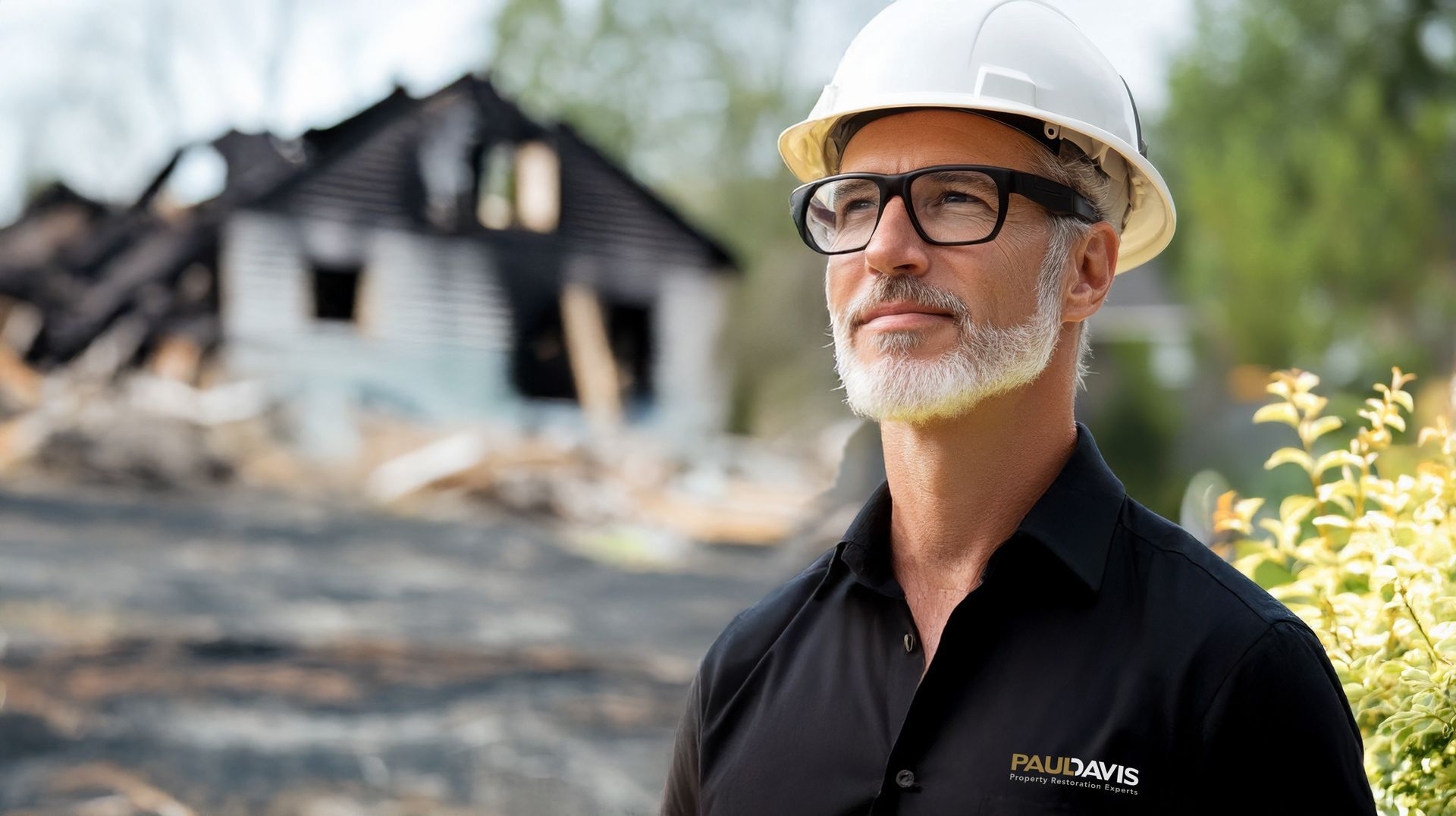
After a fire is out, the visible damage is only part of the problem. The fire damage restoration process exists to handle everything the flames left behind — soot driven deep into surfaces, odour soaked into porous materials, and the water firefighters used to put the fire out. Understanding how that process works can make a frightening situation feel more manageable, so here is what actually happens, step by step, when Paul Davis restores a fire-damaged home.
Every fire is different, so the exact sequence flexes to the property. What stays constant is the goal: return your home safely to its pre-loss condition — the state it was in before the fire — while protecting your health at every stage.
Step 1: Emergency contact and securing the property
Restoration begins the moment you call. The first priority is making the property safe and stopping further damage, a stage the industry calls mitigation. A fire often leaves a home exposed — a burned-through roof, broken windows, holes cut for ventilation — so crews board up openings and tarp the roof to keep out rain, wind, and intruders while work proceeds. Before anyone works inside, the structure is checked for hazards such as compromised framing, weakened floors, and live electrical risks.
Step 2: Full damage assessment and documentation
With the site secured, technicians inspect the full extent of the damage — not just the burned room. Smoke and soot travel far beyond the origin, riding heat and air currents into ductwork, wall cavities, and rooms that never saw flame. Each material and item is assessed as salvageable or not, and the findings are documented in detail with photos and inventories. That record matters twice: it guides the restoration plan, and it supports your insurance claim.
Step 3: Water removal and drying
Most fires are fought with water, which means most fire jobs are also water jobs. Standing water is extracted, and the structure is dried with commercial air movers and dehumidifiers. This step is urgent because leftover moisture causes secondary damage — warping, swelling, and mould, which can begin within a day or two. Drying the building properly now prevents a slower second disaster later.
Step 4: Soot and smoke residue removal
Not all soot is the same, and cleaning it the wrong way makes it worse. Technicians identify the residue type before touching a surface, because each behaves differently:
- Dry soot from fast, high-heat fires is powdery and brushes or vacuums away.
- Wet smoke from slow, smouldering fires is sticky and smeary, and needs solvent cleaning.
- Protein residue from kitchen fires is nearly invisible but leaves a strong odour and a varnish-like film.
Matching the method to the residue is what separates a clean surface from a permanently smeared one — and it is a big reason fire cleanup is not a DIY job.
Step 5: Odour neutralization
Smoke odour is stubborn because its particles are tiny enough to lodge inside porous materials — drywall, insulation, fabrics, and wood. Wiping surfaces does not reach them, which is why odour returns days later if it is only masked. Professional odour removal works at the particle level instead, using HEPA air scrubbers to capture airborne particles, thermal fogging or hydroxyl generators to neutralize trapped odour, and sealants where residue cannot be fully removed. The aim is elimination, not perfume.
Step 6: Contents cleaning and pack-out
Your belongings get their own process. Salvageable items are inventoried and, when needed, packed out and cleaned off-site with specialized methods — ultrasonic cleaning for hard items, controlled techniques for textiles, and document or photo recovery for water- and smoke-damaged keepsakes. Cleaning contents away from the worksite also keeps them clear of the dust and disruption of the repairs to come.
Step 7: Structural cleaning, repairs, and reconstruction
The final stage rebuilds. Depending on severity, this ranges from cleaning and repainting to replacing drywall, flooring, and cabinetry, up to full reconstruction of rooms lost to the fire. The standard throughout is restoration to pre-loss condition — your home as it was, not a patch job. A final walkthrough confirms the work is complete and the home is safe to live in again.
You do not have to face this alone
A house fire is one of the hardest things a family can go through, and the cleanup should not fall on your shoulders. For nearly sixty years, Paul Davis has guided Canadians through fire recovery, with 65+ locally owned locations responding 24/7. When you call, we contact you within 30 minutes, arrive on-site within hours, document your process thoroughly, and serve you with empathy and concern for your situation. If fire has damaged your home or business, call 1-800-661-5975 or find your local Paul Davis.
Frequently asked questions
How long does fire damage restoration take?
It depends on the severity. Minor smoke and soot cleanup may take a few days, while a home with significant structural damage can take weeks or months through to full reconstruction. After the assessment, your restoration team can give you a realistic timeline for your specific situation.
Can I clean smoke and soot myself after a fire?
It is not recommended. Soot comes in different types that require different cleaning methods, and the wrong approach can smear residue permanently into surfaces or push it deeper. Improper cleaning can also expose you to harmful particles, which is why professional, equipment-based cleaning is the safer choice.
Why does the smoke smell come back after cleaning?
Because smoke particles lodge inside porous materials like drywall, insulation, and fabric. Surface wiping does not reach them, so the odour returns once the air settles. Lasting odour removal treats the trapped particles directly with air scrubbing, fogging, or sealing rather than masking the smell.
Does fire restoration also deal with water damage?
Yes. Most fires are extinguished with water, so restoration almost always includes extracting that water and drying the structure. Skipping this step risks warping, swelling, and mould within a day or two, so drying is built into the process.
Will my home be restored to how it was before the fire?
That is the goal — restoration aims to return your home to its pre-loss condition, the state it was in before the fire. Depending on the damage, that can mean cleaning and repainting or full reconstruction, finished with a walkthrough to confirm the home is safe and complete.
Our Emergency Response Promise
Paul Davis franchisees across Canada are ready to respond to your property damage, 24/7.
We'll contact you within 30 minutes of your call
We’re onsite within hours
We document your process thoroughly
We serve you with empathy and concern for your situation
