

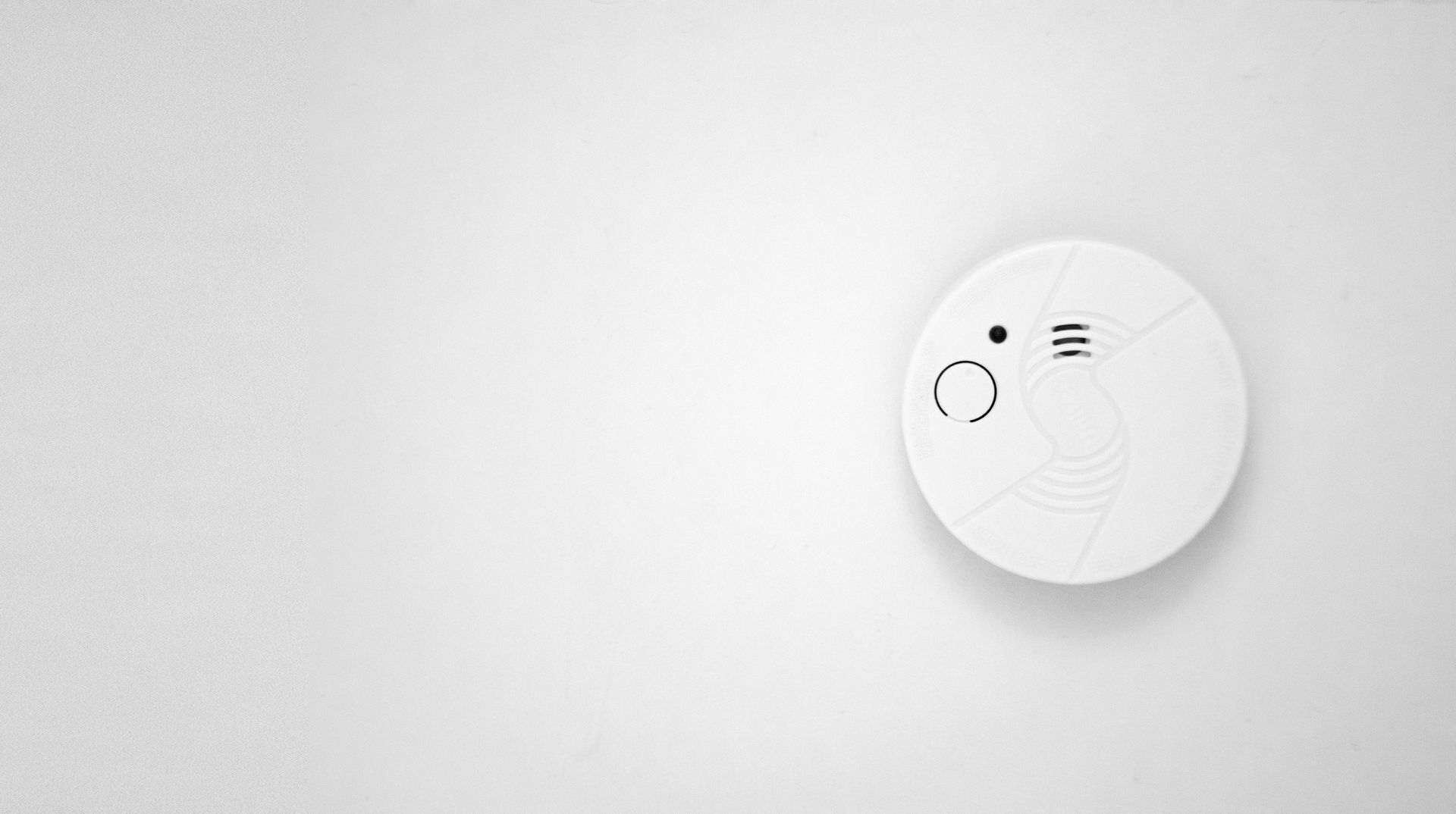
Fire Prevention Month falls every October, and it is the right moment to review fire prevention tips for your home before furnace season, holiday cooking, and colder weather bring the year's highest fire risk. Four areas make the biggest difference: working smoke alarms, a fire escape plan your household has actually practised, heating equipment that is checked before it runs constantly, and electrical systems that are inspected rather than ignored.
Where Should Smoke Alarms Go, and How Often Should You Test Them?
Install a smoke alarm on every level of your home, inside each bedroom, and in the hallway outside sleeping areas. Test each one monthly using the test button, and replace the batteries at least once a year, or immediately if the low-battery chirp starts. Replace the entire unit every 10 years, since the sensor inside degrades even when the alarm still passes a test.
A working smoke alarm is not a small detail. Statistics Canada reports that from 2015 to 2021, only 37 percent of residential fires had a working smoke alarm present, while 13 percent had no smoke alarm installed at all and 12 percent had an alarm that failed to activate. The same data shows that homes without a working alarm, including homes where the alarm's status was unknown, accounted for nearly three out of four fire-related deaths. A working alarm does not stop a fire, but it is consistently the difference between a close call and a tragedy.
Build a Home Fire Escape Plan Your Household Has Actually Practised
Every household needs two ways out of every room, a fixed outdoor meeting point a safe distance from the house, and a plan for who checks on children, older adults, or anyone with mobility needs. Draw the plan on paper so everyone can see the layout, then walk it, do not just describe it. Practise at night as well as during the day, since a fire that starts while people are asleep behaves differently than one discovered while everyone is awake and alert.
Revisit the plan twice a year, ideally when clocks change, since children grow, bedrooms get rearranged, and a plan that made sense two years ago may not reflect how the house is actually used now.
Heating Safety Tips for Fall, Before the Furnace Runs Constantly
Before the heating season settles in, have your furnace professionally inspected and the filter changed. A dirty filter forces the system to work harder and can allow heat to build up around components that were never designed to run that hot. If you use a fireplace or wood stove, have the chimney and flue swept and inspected for creosote buildup, which is a leading cause of chimney fires.
Space heaters need a 1 metre clearance from anything that can burn, including curtains, bedding, and furniture, and should always plug directly into a wall outlet rather than an extension cord or power bar, which are not rated for that sustained a load. Never leave a space heater running in an empty room or overnight unattended.
Heating equipment is also the main source of a quieter, more dangerous fall and winter risk: carbon monoxide. Install a carbon monoxide alarm on every level of the home and near sleeping areas, separate from your smoke alarms unless you are using a combination unit rated for both. According to the Public Health Agency of Canada, carbon monoxide exposure is responsible for an estimated 300 deaths and 200 hospitalizations in Canada every year, and the risk rises in the colder months when furnaces, fireplaces, and portable generators run more often in poorly ventilated spaces. Because carbon monoxide has no smell, colour, or taste, a working alarm is the only reliable way to know it is present.
Electrical Fire Prevention: What to Check Before Winter
Walk through your home and look for warning signs: outlets or switch plates that feel warm, flickering lights, a persistent burning smell with no obvious source, or an extension cord running under a rug or through a doorway. None of these are minor. Statistics Canada attributes mechanical or electrical failures or malfunctions to 18 percent of residential fires in 2021, making it one of the leading contributing factors behind cooking and open flame.
Avoid daisy-chaining power bars, do not run cords under carpets where heat cannot dissipate, and have an electrician look at any circuit that trips repeatedly rather than simply resetting it and moving on. If your home is more than 30 years old and still has its original wiring, ask a licensed electrician whether an inspection is due. Older wiring was not built for the number of devices most households now run at once.
Frequently asked questions
How often should I test my smoke alarms?
Test every smoke alarm monthly using the test button, replace batteries at least once a year, and replace the entire unit every 10 years, since the internal sensor degrades over time even if it still passes a test.
Where should carbon monoxide alarms be installed?
Install a carbon monoxide alarm on every level of your home and near sleeping areas, separate from smoke alarms unless you are using a combination unit rated for both gases.
What is the leading cause of residential fires in Canada?
According to Statistics Canada, cooking equipment and smoker's material or open flame together account for over half of all residential fires reported between 2015 and 2021, with mechanical or electrical failures a significant contributing factor as well.
How often should my household practise our fire escape plan?
Walk through the plan at least twice a year, and practise it once during the day and once after dark, since escaping a fire while asleep is different from escaping one you can see and hear clearly.
Can I plug a space heater into an extension cord?
No. Space heaters draw more current than most extension cords and power bars are rated for. Plug them directly into a wall outlet and keep at least 1 metre of clearance from anything that can burn.
Fire Prevention Tips for Your Home, and What to Do If a Fire Still Happens
Even the most careful household can face a fire, and when that happens, Paul Davis is ready with our Emergency Response Promise: we will contact you within 30 minutes of your call, we are onsite within hours, we document your process thoroughly, and we serve you with empathy and concern for your situation. Call 1-800-661-5975 or find your local Paul Davis, with 65+ locations across Canada.

Our Emergency Response Promise
Paul Davis franchisees across Canada are ready to respond to your property damage, 24/7.
We'll contact you within 30 minutes of your call
We’re onsite within hours
We document your process thoroughly
We serve you with empathy and concern for your situation
