

New school routines mean new independence, and that includes moments when your child may need to act without you nearby. A family emergency plan for kids turns "what if" into a rehearsed response, so your child knows exactly what to do if there is a fire, a lockdown, or an unexpected change to the after-school routine.
September is the natural time to build or refresh this plan. Backpacks are packed, schedules are set, and kids are already adjusting to new expectations. Add one more: knowing their part in a family emergency plan.
Why back-to-school is the right moment to plan
Fall brings more solo transitions for kids: walking to school alone, staying briefly home alone after the bus drops them off, or being picked up by a different adult on a given day. Each of these moments carries a small decision point, and a rehearsed plan removes the guesswork.
According to Statistics Canada's Survey of Emergency Preparedness and Resilience, fewer than half of Canadian households, 47 percent, reported engaging in a moderately high or high number of emergency planning activities, defined as having an exit plan, an emergency supply kit, copies of important documents, and an emergency contact list. That means most Canadian households are missing at least one of these basics. September is a practical reset point to close that gap before winter storm season adds another layer of urgency.
Building a fire escape plan your kids can actually follow
A fire escape plan only works if a child can execute it under stress, not just recite it calmly at the kitchen table.
- Walk it, do not just talk about it. Physically walk each escape route from every bedroom, including the second exit if a door is blocked by smoke or heat. Kids retain physical rehearsal far better than a verbal explanation.
- Pick a meeting spot outside, not inside. A tree, a mailbox, or a neighbour's driveway across the street works. The rule is simple: once outside, go to the spot and stay there. Do not go back inside for pets, toys, or a sibling.
- Practise the low-crawl. Smoke rises and the cleanest air is close to the floor. Have kids practise getting low and moving toward the exit, since this is a physical habit, not just an instruction they remember later.
- Test it with the door closed and the lights off. A drill in bright daylight with open doors does not prepare a child for what an actual house fire looks and feels like: dark, disorienting, and full of unfamiliar sound.
- Time it twice a year. Run the drill again in early September and again after the winter time change, since routines and bedroom layouts change and the plan needs to keep up.
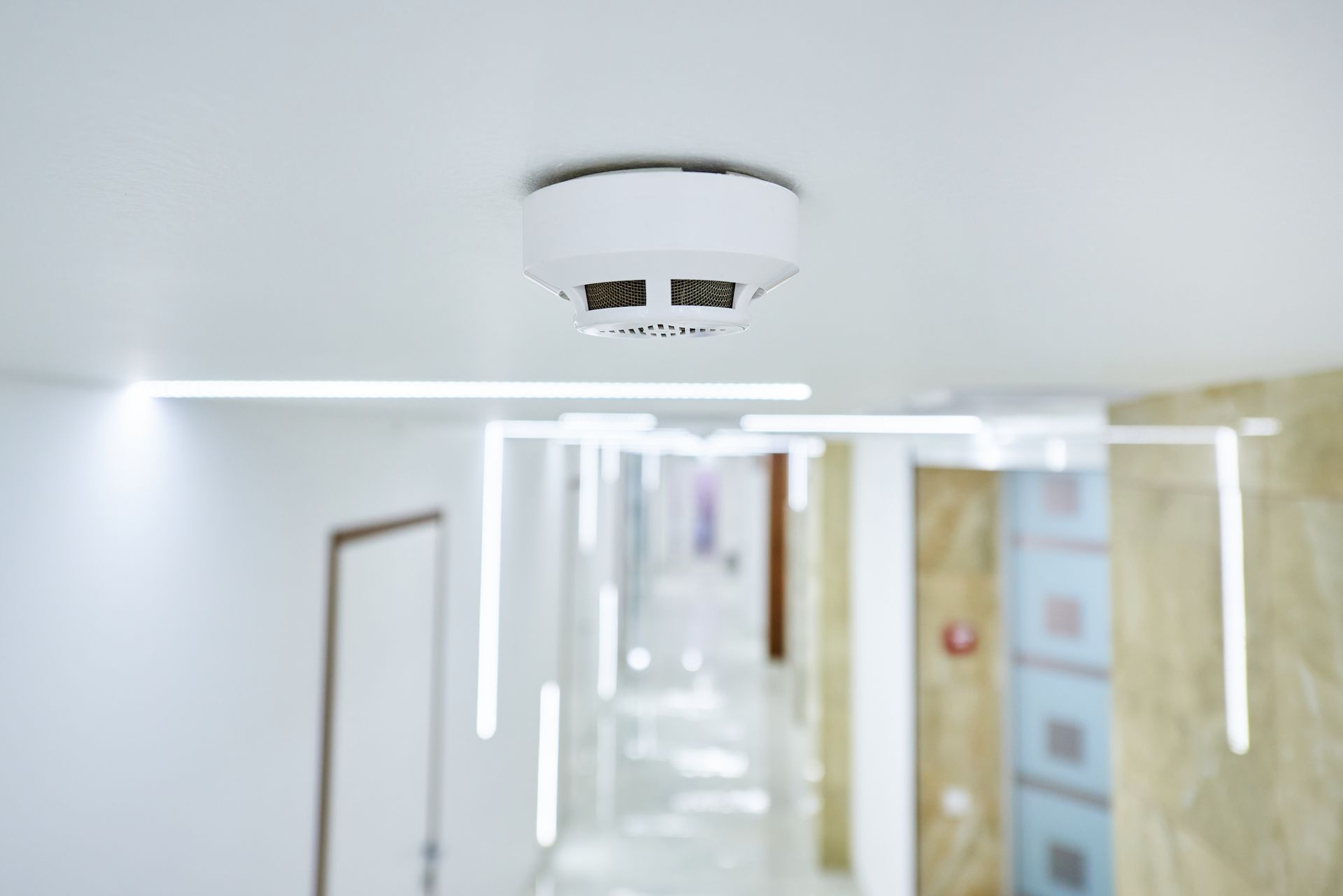
Smoke alarms make this plan effective rather than theoretical. Test every alarm in the house this month, not just the ones near bedrooms.
Family reunification: what happens if you are not together
A reunification plan answers one question: if something happens and the family is not all in one place, where does everyone go?
- Choose two meeting points. One near the home for a local emergency like a fire, and one further away for something that makes the neighbourhood itself inaccessible, like a gas leak or major storm.
- Pick an out-of-town contact. In a widespread emergency, local phone lines can be congested while long-distance calls sometimes get through. A relative or family friend in another city or province can be the central point everyone calls to check in.
- Write it down, then post it. A laminated card by the door with addresses, phone numbers, and the two meeting points removes the need for a stressed child to remember details from memory.
- Confirm the school's own plan. Ask your child's school how they handle reunification during a lockdown or evacuation, and make sure your family plan does not conflict with the school's procedure. Fold the school's pickup password or designated adult list into your own plan.
Home-alone safety for the after-school gap
Many families have a window, even ten or fifteen minutes, where a child is home before an adult arrives. That gap needs its own short checklist.
- A locked-door routine. Teach the specific steps: lock the door immediately after entering, do not open it for anyone, and call a parent to confirm arrival.
- A simple decision tree for the phone. Who to call first, second, and third, written down near the phone or saved as favourites, not buried in a contacts list.
- A no-guessing fire rule. If the smoke alarm sounds, the response is always the same: leave immediately, go to the meeting spot, then call for help from outside. No child should be taught to investigate a smoke alarm first.
- A defined boundary for cooking or appliances. Decide in advance what a child is and is not allowed to use unsupervised, and revisit it as they get older.
Provincial guidelines on leaving children unsupervised vary, and readiness depends on maturity as much as age, so build the plan around your specific child's comfort and confidence, not just a birthday.
When the plan is not enough
Even a well-rehearsed plan cannot always prevent damage. If a fire, flood, or storm does affect your home, Paul Davis is ready with our Emergency Response Promise: we will contact you within 30 minutes of your call, we are onsite within hours, we document your process thoroughly, and we serve you with empathy and concern for your situation. Call 1-800-661-5975 or find your local Paul Davis, with 65+ locations across Canada.
Frequently asked questions
How often should we practise our family fire escape plan?
Twice a year works well for most families: once in early September when routines reset, and again after the winter time change. Practise more often for younger children still building the habit.
What is the difference between a meeting spot and a reunification point?
A meeting spot is right outside the home for immediate emergencies like a fire. A reunification point is further away, used when the neighbourhood itself is affected and the family needs a location beyond walking distance.
What is the single most important home-alone rule for kids?
Never open the door for anyone, and if the smoke alarm sounds, leave immediately rather than investigating. Both rules remove the need for a child to make a judgment call under stress.
Should we tell our child's school about our family plan?
Yes. Ask about the school's own lockdown and reunification procedure first, then make sure your family's plan, including who is authorized to pick up your child, matches it.
Our Emergency Response Promise
Paul Davis franchisees across Canada are ready to respond to your property damage, 24/7.
We'll contact you within 30 minutes of your call
We’re onsite within hours
We document your process thoroughly
We serve you with empathy and concern for your situation
