Winter Power Outage Prep: Build Your Cold‑Weather Emergency Kit

Stay safe, warm, and connected when winter blackouts hit.
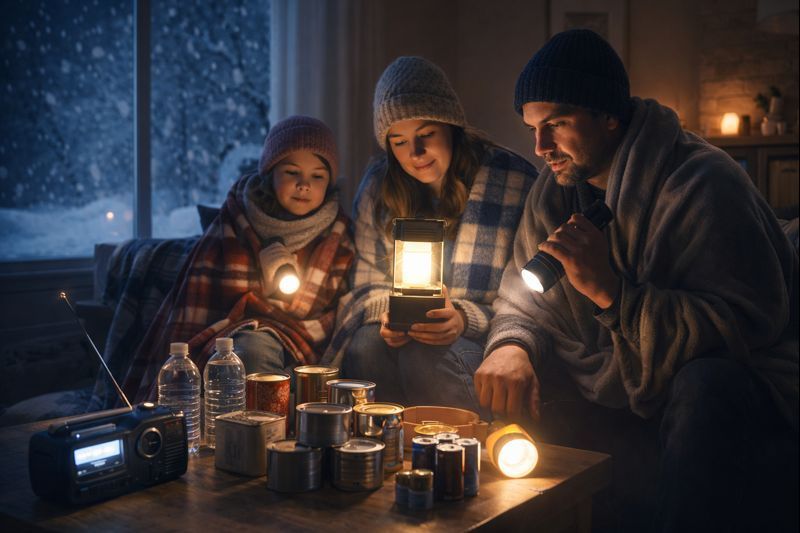
Family using flashlights and lanterns during winter blackout, surrounded by emergency supplies and snow.

Canadian winters are beautiful — but they can also bring severe storms, heavy snow, ice buildup, and freezing temperatures that increase the risk of power outages. From coast to coast, utilities can be disrupted for hours or even days. That’s why a Cold‑Weather Emergency Kit is essential for every household.


Whether it’s winter winds, ice storms, or fallen trees, a well‑prepared emergency kit keeps your family safe, warm, fed, and connected. Here’s how to build a kit that’s tailored to Canadian winter blackout risks — with practical steps and expert tips.


Why Winter Power Outage Prep Matters in Canada


Power outages in winter are not rare. A severe ice storm or snowstorm can knock out power across entire communities. Without proper preparation, households can face dangerous conditions like:

  • Loss of heat in sub‑zero temperatures
  • Spoiled food due to fridge/freezer shutdown
  • Inability to communicate with emergency services
  • Exposure to cold and hypothermia risk
    Preparing now gives you peace of mind and practical readiness when the lights go out.

Your Cold‑Weather Emergency Kit Essentials

1. Reliable Heat Sources

Staying warm is the top priority during a blackout.

✔ Portable space heaters (rated for indoor use)
Choose units with tip‑over and overheat protection.

✔ Extra blankets and warm clothing
Include thermal blankets, wool socks, hats, and mittens.

✔ Sleeping bags rated for sub‑zero weather
Perfect for keeping everyone warm if heat is lost overnight.

Safety Tip: Never use outdoor heaters, barbecue grills, or generators indoors — carbon monoxide poisoning is a serious risk.


2. Light and Power

You’ll need safe, dependable light when darkness falls.

✔ LED flashlights
Long‑lasting and safe; keep one per household member.

✔ Headlamps
Hands‑free lighting is invaluable when you’re navigating in the dark.

✔ Extra batteries or rechargeable power banks
Choose power banks with high capacity — keep devices charged.

✔ Solar or hand‑crank lanterns
Great backup when batteries run low.


3. Food Storage & Safe Eating

Cold weather prolongs fridge safety, but only up to a point.

✔ Thermometer for fridge/freezer
Food stays safe at
4 °C (40 °F) or below. Monitor temperatures during an outage.

✔ Ready‑to‑eat, non‑perishable foods
Stock high‑calorie options like granola bars, canned soups, trail mix, and nut butters.

✔ Manual can opener
Ensure you can access food without power.

✔ Ice packs or coolers
These extend cold storage during multi‑day outages.


4. Communication & Emergency Tools

Staying informed and able to contact help is crucial.

✔ Battery‑powered or hand‑crank radio
Tune in for weather updates and emergency alerts.

✔ Fully charged cellphone and portable chargers
Rotate charging when power is available.

✔ Emergency contact list
Include local utilities, Paul Davis, and family contact info.

✔ Whistle
For attracting attention if needed.


5. First Aid & Personal Supplies

Be ready for minor injuries and special needs.

✔ First aid kit with essentials
Bandages, antiseptic, pain relievers, and cold packs.

✔ Medications
Keep a 72‑hour supply on hand.

✔ Extra baby, elderly, or pet supplies
Formula, diapers, medication, and food.


Winter Blackout Safety Tips
  • Check your kit monthly in winter and replace expired items.
  • Know how to shut off utilities safely — gas, electricity, and water.
  • Keep your vehicle tank above half‑full to stay warm if stranded.
  • Install carbon monoxide detectors with battery backup.
  • Plan for power outage sleeping arrangements — lower levels retain heat better.

Paul Davis Can Help You Prepare and Recover


Power outages can cause more than inconvenience — frozen pipes, water damage, and structural issues can follow. Paul Davis experts help with winter risk planning, damage mitigation, and restoration if disaster strikes.

Start the year stronger — contact your local Paul Davis team for a winter readiness review and emergency planning support.
November 5, 2026
Every property loss is different. A burst pipe in a family home. A commercial fire. A regional storm affecting multiple properties. Each presents its own challenges, but one thing remains consistent. When a property loss disrupts someone's home or business, having a plan helps restore certainty during a time of uncertainty. Years of working alongside independent adjusters have taught Paul Davis that preparation begins long before restoration equipment arrives on site. A clear plan establishes how information will flow, how timelines and expectations will be communicated and how deviations will be documented as the claim progresses. Combined with Paul Davis's structured Respond. Mitigate. Restore. Return. process, that alignment helps everyone understand what happens next. That structured approach helps reduce uncertainty from day one - for the adjuster managing the claim and the policyholder trying to understand what happens next. Adjusters know how the file will be kept current. Policyholders understand what to expect. Restoration teams remain aligned on priorities, and changes to scope or timing can be communicated before they become surprises. On complex and large-loss files, more frequent updates help keep high-priority claims visible and moving. The result isn't simply a better restoration. It's a better claims experience. Because when everyone starts with the same plan, it's easier to move the claim forward with confidence. Connect with Your Local Paul Davis Team Whether you're responding to a property emergency, managing a complex commercial claim or looking to reconnect, your local Paul Davis team is ready to help. We'd welcome the opportunity to show you how clear planning, proactive communication and dependable project updates can help set expectations early and keep claims moving with confidence.
November 5, 2026
Every independent adjuster knows that claims rarely fall behind because of one major issue. More often, they're delayed by dozens of small interruptions. Waiting for documentation. Following up on project updates. Clarifying scope changes. Individually, each delay seems minor. Together, they consume valuable time and slow the entire claims process. Years of working alongside independent adjusters have taught Paul Davis that proactive communication isn't about sending more updates. It's about getting accurate, useful information into the file before someone has to ask for it. An adjuster should be able to open the file and quickly understand where the claim stands, what's changed and what needs to happen next. Because property losses don't happen on a schedule, Paul Davis provides 24/7 emergency response. Within the first 24 hours, a detailed report - supported by photos and site information - helps give adjusters an early picture of source of loss, scope and severity, mitigation requirements and contents exposures. From there, Paul Davis System workflows support a regular cadence of file updates, with changes to scope, timing or projected completion communicated proactively rather than waiting for the adjuster to follow up. The result is fewer surprises, fewer delays and fewer follow-up requests. It also helps adjusters set clearer expectations with policyholders, while giving policyholders greater certainty during a stressful time. When communication becomes part of the restoration process instead of an afterthought, adjusters spend less time managing information and more time moving claims forward. Because the best restoration partners don't just restore properties. They help make the adjuster's job easier. Connect With Your Local Paul Davis Team Whether you're responding to a property emergency, managing a complex commercial claim or looking to reconnect, your local Paul Davis team is ready to help. We'd welcome the opportunity to show you how fast, accurate reporting and proactive file updates can reduce follow-up, manage expectations and keep your claims moving forward.
Show More
November 5, 2026
Chaque sinistre est différent. Un tuyau éclaté dans une maison familiale. Un incendie dans un immeuble commercial. Une tempête régionale qui touche plusieurs propriétés. Chaque situation présente ses propres défis, mais une chose demeure constante. Quand un sinistre perturbe le domicile ou l’entreprise de quelqu’un, avoir un plan aide à rétablir un sentiment de certitude en période d’incertitude. Des années de collaboration avec les experts en sinistre indépendants ont appris à Paul Davis que la préparation commence bien avant l’arrivée de l’équipement de restauration sur les lieux. Un plan clair établit comment l’information circulera, comment les échéanciers et les attentes seront communiqués et comment les écarts seront documentés au fil du dossier. Combiné au processus structuré Respond. Mitigate. Restore. Return. de Paul Davis, cet alignement aide chacun à comprendre la suite des choses. Cette approche structurée réduit l’incertitude dès le premier jour – pour l’expert en sinistre qui gère le dossier comme pour l’assuré qui cherche à comprendre la suite des choses. Les experts en sinistre savent comment le dossier sera tenu à jour. Les assurés savent à quoi s’attendre. Les équipes de restauration restent alignées sur les priorités, et les changements de portée ou d’échéancier peuvent être communiqués avant de devenir des surprises. Pour les dossiers complexes et les sinistres majeurs, des mises à jour plus fréquentes aident à garder les réclamations prioritaires bien visibles et en mouvement. Le résultat n’est pas seulement une meilleure restauration. C’est une meilleure expérience de règlement. Parce que lorsque tout le monde part du même plan, il est plus facile de faire avancer le dossier en toute confiance. Communiquez avec votre équipe Paul Davis locale Que vous interveniez lors d’une urgence, gériez une réclamation commerciale complexe ou souhaitiez renouer le contact, votre équipe Paul Davis locale est prête à vous aider. Nous serions heureux de vous montrer comment une planification claire, une communication proactive et des mises à jour fiables peuvent aider à établir les attentes dès le départ et à faire avancer les dossiers en toute confiance.
November 5, 2026
Tous les experts en sinistre indépendants le savent : un dossier prend rarement du retard à cause d’un seul gros problème. Le plus souvent, ce sont des dizaines de petites interruptions qui le ralentissent. Attendre des documents. Relancer pour obtenir des nouvelles du chantier. Clarifier des changements à la portée des travaux. Prise isolément, chaque attente semble mineure. Mises bout à bout, elles grugent un temps précieux et ralentissent tout le processus de règlement. Des années de collaboration avec les experts en sinistre indépendants ont appris à Paul Davis qu’une communication proactive ne consiste pas à envoyer plus de mises à jour. Il s’agit de verser au dossier une information juste et utile avant que quelqu’un ait à la demander. En ouvrant le dossier, l’expert en sinistre devrait comprendre rapidement où en est la réclamation, ce qui a changé et ce qui doit se passer ensuite. Comme les sinistres ne surviennent pas selon un horaire, Paul Davis offre un service d’intervention d’urgence 24 heures sur 24, 7 jours sur 7. Dans les 24 premières heures, un rapport détaillé – appuyé de photos et de renseignements sur les lieux – donne rapidement aux experts en sinistre un portrait de la source du sinistre, de la portée et de la gravité des dommages, des mesures d’atténuation requises et des biens touchés. Par la suite, les processus du Paul Davis System assurent des mises à jour régulières du dossier, et tout changement de portée, d’échéancier ou de date d’achèvement prévue est communiqué de façon proactive, sans attendre que l’expert en sinistre fasse un suivi. Résultat : moins de surprises, moins de retards et moins de demandes de suivi. Les experts en sinistre peuvent aussi établir des attentes plus claires avec les assurés, qui gagnent en assurance dans une période stressante. Quand la communication fait partie intégrante du processus de restauration plutôt que d’être une réflexion après coup, les experts en sinistre passent moins de temps à gérer l’information et plus de temps à faire avancer les dossiers. Parce que les meilleurs partenaires en restauration ne se contentent pas de restaurer des propriétés. Ils facilitent le travail de l’expert en sinistre. Communiquez avec votre équipe Paul Davis locale Que vous interveniez lors d’une urgence, gériez une réclamation commerciale complexe ou souhaitiez renouer le contact, votre équipe Paul Davis locale est prête à vous aider. Nous serions heureux de vous montrer comment des rapports rapides et précis et des mises à jour proactives du dossier peuvent réduire les suivis, mieux gérer les attentes et faire avancer vos dossiers.
Afficher plus


Paul Davis Can Help. Let's Talk.

Our Emergency Response Promise

Paul Davis franchisees across Canada are ready to respond to your property damage, 24/7.

A clock in a circle with an arrow pointing to the right.

We'll contact you within 30 minutes of your call

A black and white icon of a Paul Davis truck on a white background.

We’re onsite within hours

A black and white drawing of arrows pointing in opposite directions.

We document your process thoroughly

A handshake in the shape of a heart on a white background.

We serve you with empathy and concern for your situation

Our Team Is Ready To Help