Summer Storms & Leaky Windows: How to Keep Water Out Before It Gets In

Spot worn seals, cracked caulking, and early signs of water damage before the next summer storm hits.
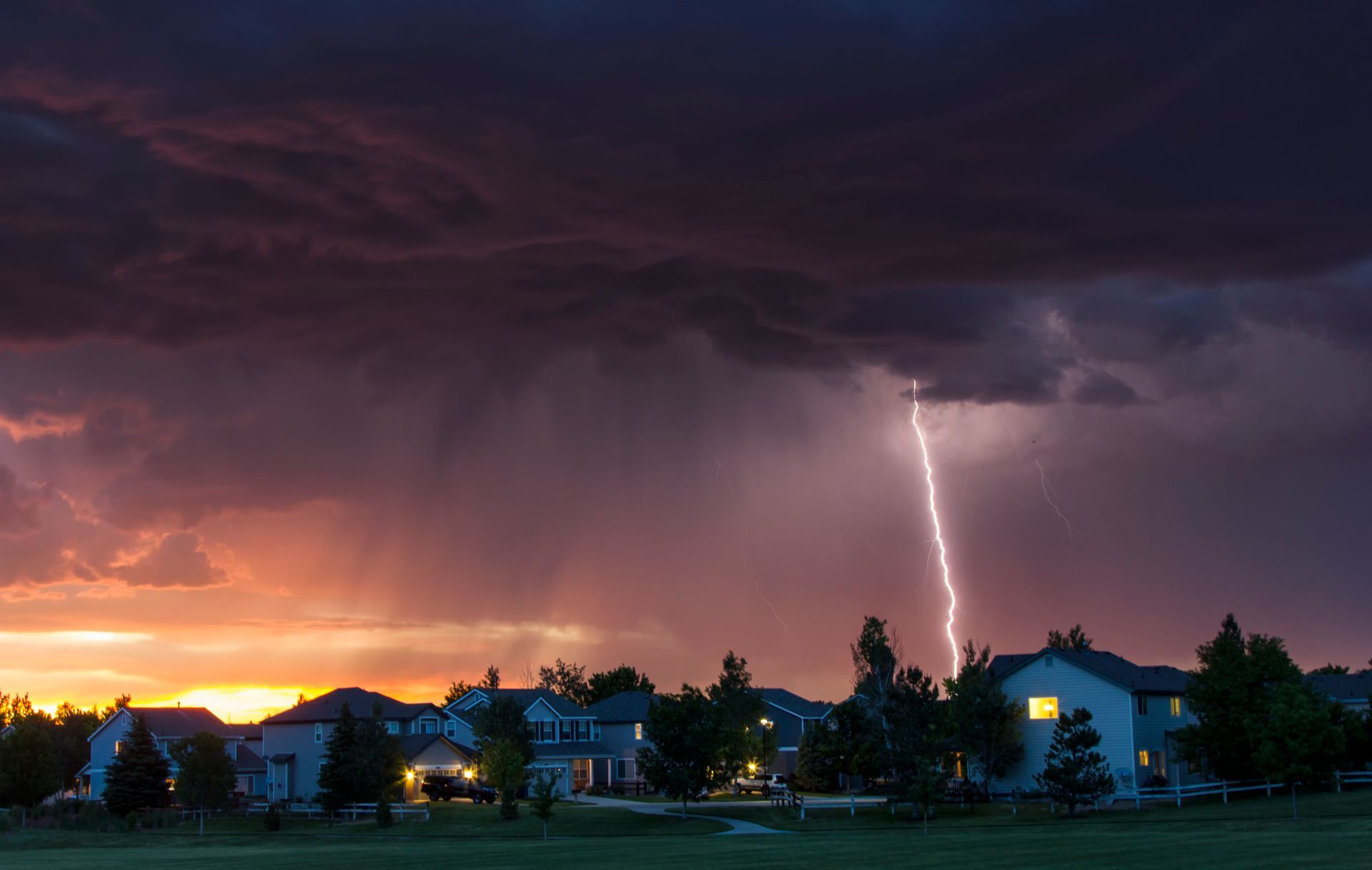
Lightning over a suburban neighborhood at dusk with dark storm clouds and orange sunset glow

Summer storms can move in fast. Heavy rain, strong winds, and sudden downpours can put pressure on your home’s exterior. One of the first places water often finds a way in? Your windows.


A small crack in the caulking. Worn weatherstripping. A loose seal around the frame. These may seem minor, but during a storm, they can allow water to seep into walls, floors, and window frames.


The good news is that many window leaks can be prevented with simple maintenance. A few small checks now can help reduce the risk of water damage, mould growth, and costly repairs later.


Why Windows Leak During Summer Storms

Windows are built to protect your home, but over time, weather and regular wear can weaken the materials that keep water out.


Common causes of leaky windows include:

  • Cracked or missing exterior caulking
  • Worn or compressed weatherstripping
  • Damaged window seals
  • Gaps between the window frame and siding
  • Poor drainage around the window
  • Blocked weep holes
  • Aging or shifting window frames


In many Canadian homes, winter freeze-thaw cycles can also loosen seals and create small openings. By the time summer storms arrive, those weak spots may be ready to leak.


Signs Your Windows May Be Letting Water In

Not every leak starts with water dripping onto the floor. Some warning signs are more subtle and may appear around trim, drywall, or flooring.


Watch for:

  • Peeling paint or bubbling drywall near windows
  • Soft or swollen wood trim
  • Musty odours
  • Condensation between panes of glass
  • Water stains on walls or window sills
  • Drafts around closed windows
  • Visible cracks in caulking
  • Damp carpet or flooring below windows


If you notice any of these signs, do not ignore them. Moisture can spread behind surfaces before the damage becomes visible.


Check Caulking, Weatherstripping, and Frames

Start outside. Look closely at the caulking around each window. If it is cracked, brittle, missing, or pulling away from the frame, it may need to be removed and replaced with an exterior-grade sealant.


Next, inspect the weatherstripping. This seals the moving parts of a window and helps keep out rain, drafts, insects, and outdoor air. If it is cracked, flattened, loose, or missing, it may no longer create a tight seal.


Do not forget the window frame. Wood frames can rot. Vinyl frames can warp. Older frames can shift over time. Look for soft spots, discolouration, cracks, loose trim, or gaps between the frame and wall.


If the frame feels soft or shows signs of rot, do not simply cover it with caulking. Moisture may already be trapped inside. A professional inspection can help determine whether repair or replacement is needed.


Keep Water Moving Away From Your Home

Your windows are only one part of your home’s water protection system. Gutters, downspouts, grading, rooflines, and window wells all help move rain away from your home.


Before heavy summer storms, check that:

  • Gutters are clear of leaves and debris
  • Downspouts direct water away from the foundation
  • Soil slopes away from your home
  • Window wells are clean and draining properly
  • Exterior trim and siding are secure
  • Roof runoff is not spilling directly over windows


Good drainage reduces pressure on window seals and helps protect your home from water damage and mould risk.


What To Do If Water Gets In

If water comes through a window during or after a storm, act quickly.


Move furniture, rugs, electronics, and valuables away from the area. Use towels or buckets to manage minor water entry, but do not assume the visible water is the only issue. Water may have moved behind walls, under flooring, or into insulation.


After the storm passes:

  • Take photos of the damage
  • Check nearby walls, floors, and trim
  • Avoid disturbing areas with visible mould
  • Contact your insurance provider if needed
  • Call a professional restoration team if water has spread


Fast action can help reduce further damage and support a smoother restoration process.


Prevention Now Can Save Stress Later

Window maintenance is easy to overlook, but it can make a real difference before summer storms arrive.


Checking your caulking, weatherstripping, frames, and drainage can help reduce the risk of water damage, mould growth, damaged drywall, rotting trim, flooring damage, and higher repair costs.


Your home works hard to protect you. Regular maintenance helps protect it in return.


When You Need Help, Paul Davis Is Ready

Even with the best preparation, storms can still cause unexpected damage. If water enters your home, Paul Davis can help assess the situation and guide the restoration process with care.


Paul Davis teams across Canada provide support for water damage, storm damage, mould remediation, and emergency restoration. We respond with urgency, document the process thoroughly, and treat your home with respect.


Need help after a storm?

Find your local Paul Davis and get expert support today.
November 5, 2026
Every property loss is different. A burst pipe in a family home. A commercial fire. A regional storm affecting multiple properties. Each presents its own challenges, but one thing remains consistent. When a property loss disrupts someone's home or business, having a plan helps restore certainty during a time of uncertainty. Years of working alongside independent adjusters have taught Paul Davis that preparation begins long before restoration equipment arrives on site. A clear plan establishes how information will flow, how timelines and expectations will be communicated and how deviations will be documented as the claim progresses. Combined with Paul Davis's structured Respond. Mitigate. Restore. Return. process, that alignment helps everyone understand what happens next. That structured approach helps reduce uncertainty from day one - for the adjuster managing the claim and the policyholder trying to understand what happens next. Adjusters know how the file will be kept current. Policyholders understand what to expect. Restoration teams remain aligned on priorities, and changes to scope or timing can be communicated before they become surprises. On complex and large-loss files, more frequent updates help keep high-priority claims visible and moving. The result isn't simply a better restoration. It's a better claims experience. Because when everyone starts with the same plan, it's easier to move the claim forward with confidence. Connect with Your Local Paul Davis Team Whether you're responding to a property emergency, managing a complex commercial claim or looking to reconnect, your local Paul Davis team is ready to help. We'd welcome the opportunity to show you how clear planning, proactive communication and dependable project updates can help set expectations early and keep claims moving with confidence.
November 5, 2026
Every independent adjuster knows that claims rarely fall behind because of one major issue. More often, they're delayed by dozens of small interruptions. Waiting for documentation. Following up on project updates. Clarifying scope changes. Individually, each delay seems minor. Together, they consume valuable time and slow the entire claims process. Years of working alongside independent adjusters have taught Paul Davis that proactive communication isn't about sending more updates. It's about getting accurate, useful information into the file before someone has to ask for it. An adjuster should be able to open the file and quickly understand where the claim stands, what's changed and what needs to happen next. Because property losses don't happen on a schedule, Paul Davis provides 24/7 emergency response. Within the first 24 hours, a detailed report - supported by photos and site information - helps give adjusters an early picture of source of loss, scope and severity, mitigation requirements and contents exposures. From there, Paul Davis System workflows support a regular cadence of file updates, with changes to scope, timing or projected completion communicated proactively rather than waiting for the adjuster to follow up. The result is fewer surprises, fewer delays and fewer follow-up requests. It also helps adjusters set clearer expectations with policyholders, while giving policyholders greater certainty during a stressful time. When communication becomes part of the restoration process instead of an afterthought, adjusters spend less time managing information and more time moving claims forward. Because the best restoration partners don't just restore properties. They help make the adjuster's job easier. Connect With Your Local Paul Davis Team Whether you're responding to a property emergency, managing a complex commercial claim or looking to reconnect, your local Paul Davis team is ready to help. We'd welcome the opportunity to show you how fast, accurate reporting and proactive file updates can reduce follow-up, manage expectations and keep your claims moving forward.
Show More
November 5, 2026
Chaque sinistre est différent. Un tuyau éclaté dans une maison familiale. Un incendie dans un immeuble commercial. Une tempête régionale qui touche plusieurs propriétés. Chaque situation présente ses propres défis, mais une chose demeure constante. Quand un sinistre perturbe le domicile ou l’entreprise de quelqu’un, avoir un plan aide à rétablir un sentiment de certitude en période d’incertitude. Des années de collaboration avec les experts en sinistre indépendants ont appris à Paul Davis que la préparation commence bien avant l’arrivée de l’équipement de restauration sur les lieux. Un plan clair établit comment l’information circulera, comment les échéanciers et les attentes seront communiqués et comment les écarts seront documentés au fil du dossier. Combiné au processus structuré Respond. Mitigate. Restore. Return. de Paul Davis, cet alignement aide chacun à comprendre la suite des choses. Cette approche structurée réduit l’incertitude dès le premier jour – pour l’expert en sinistre qui gère le dossier comme pour l’assuré qui cherche à comprendre la suite des choses. Les experts en sinistre savent comment le dossier sera tenu à jour. Les assurés savent à quoi s’attendre. Les équipes de restauration restent alignées sur les priorités, et les changements de portée ou d’échéancier peuvent être communiqués avant de devenir des surprises. Pour les dossiers complexes et les sinistres majeurs, des mises à jour plus fréquentes aident à garder les réclamations prioritaires bien visibles et en mouvement. Le résultat n’est pas seulement une meilleure restauration. C’est une meilleure expérience de règlement. Parce que lorsque tout le monde part du même plan, il est plus facile de faire avancer le dossier en toute confiance. Communiquez avec votre équipe Paul Davis locale Que vous interveniez lors d’une urgence, gériez une réclamation commerciale complexe ou souhaitiez renouer le contact, votre équipe Paul Davis locale est prête à vous aider. Nous serions heureux de vous montrer comment une planification claire, une communication proactive et des mises à jour fiables peuvent aider à établir les attentes dès le départ et à faire avancer les dossiers en toute confiance.
November 5, 2026
Tous les experts en sinistre indépendants le savent : un dossier prend rarement du retard à cause d’un seul gros problème. Le plus souvent, ce sont des dizaines de petites interruptions qui le ralentissent. Attendre des documents. Relancer pour obtenir des nouvelles du chantier. Clarifier des changements à la portée des travaux. Prise isolément, chaque attente semble mineure. Mises bout à bout, elles grugent un temps précieux et ralentissent tout le processus de règlement. Des années de collaboration avec les experts en sinistre indépendants ont appris à Paul Davis qu’une communication proactive ne consiste pas à envoyer plus de mises à jour. Il s’agit de verser au dossier une information juste et utile avant que quelqu’un ait à la demander. En ouvrant le dossier, l’expert en sinistre devrait comprendre rapidement où en est la réclamation, ce qui a changé et ce qui doit se passer ensuite. Comme les sinistres ne surviennent pas selon un horaire, Paul Davis offre un service d’intervention d’urgence 24 heures sur 24, 7 jours sur 7. Dans les 24 premières heures, un rapport détaillé – appuyé de photos et de renseignements sur les lieux – donne rapidement aux experts en sinistre un portrait de la source du sinistre, de la portée et de la gravité des dommages, des mesures d’atténuation requises et des biens touchés. Par la suite, les processus du Paul Davis System assurent des mises à jour régulières du dossier, et tout changement de portée, d’échéancier ou de date d’achèvement prévue est communiqué de façon proactive, sans attendre que l’expert en sinistre fasse un suivi. Résultat : moins de surprises, moins de retards et moins de demandes de suivi. Les experts en sinistre peuvent aussi établir des attentes plus claires avec les assurés, qui gagnent en assurance dans une période stressante. Quand la communication fait partie intégrante du processus de restauration plutôt que d’être une réflexion après coup, les experts en sinistre passent moins de temps à gérer l’information et plus de temps à faire avancer les dossiers. Parce que les meilleurs partenaires en restauration ne se contentent pas de restaurer des propriétés. Ils facilitent le travail de l’expert en sinistre. Communiquez avec votre équipe Paul Davis locale Que vous interveniez lors d’une urgence, gériez une réclamation commerciale complexe ou souhaitiez renouer le contact, votre équipe Paul Davis locale est prête à vous aider. Nous serions heureux de vous montrer comment des rapports rapides et précis et des mises à jour proactives du dossier peuvent réduire les suivis, mieux gérer les attentes et faire avancer vos dossiers.
Afficher plus


Paul Davis Can Help. Let's Talk.

Our Emergency Response Promise

Paul Davis franchisees across Canada are ready to respond to your property damage, 24/7.

A clock in a circle with an arrow pointing to the right.

We'll contact you within 30 minutes of your call

A black and white icon of a Paul Davis truck on a white background.

We’re onsite within hours

A black and white drawing of arrows pointing in opposite directions.

We document your process thoroughly

A handshake in the shape of a heart on a white background.

We serve you with empathy and concern for your situation

Our Team Is Ready To Help